We cover the technical side of technology. Not just the product launches and press releases, but the architecture decisions, the tradeoffs, and the engineering culture that shapes what actually gets built. The stuff that matters when you’re knee-deep in code at 2 AM wondering why someone thought this was a good idea.
Topics we cover: Software · Hardware · Developer Tools · AI & Machine Learning · Open Source · Security
Everyone’s talking about web performance, but they’re missing what actually matters. Core web vitals in 2026 isn’t just another tech trend to monitor casually. There’s something bigger happening here, and once you see it, the whole picture changes.
Here’s what’s different this time around. I’ve been tracking this stuff for years, and LCP under 2.5 seconds isn’t just a nice-to-have anymore. It’s table stakes for ranking competitively. When you actually dig into the data instead of skimming the surface coverage, that becomes crystal clear.
The War Story: Web performance and core web vitals in 2026
The Report: Setting the Terms
Google confirmed CWV signals are part of their ranking algorithm back in 2021. That’s not just background noise in web performance discussions anymore. It’s the foundation that makes everything else we’re seeing make sense. This isn’t some flash-in-the-pan trend. The conditions creating this shift have been building for years, and they’re finally hitting critical mass.
Two big changes tell the story. LCP under 2.5 seconds is now expected baseline for competitive ranking. INP replaced FID as the responsiveness metric in March 2024. Put those together, and you can see what web.dev performance has been documenting from the inside. These changes have staying power, and the ripple effects go way beyond what the headlines suggest.
Here’s why this moment matters. Compare what was true three years ago to what’s true now. It’s not just that the numbers got bigger. The whole game changed. Different players, different infrastructure, different incentives. All pushing in the same direction instead of canceling each other out. That’s what makes this time different.
The interesting thing isn’t that something completely new appeared out of nowhere. These patterns have been visible for a while if you knew where to look. What changed is that ignoring them now takes real effort. You have to actively choose not to pay attention. That’s when you know something has crossed from “emerging trend” to “new reality.”
Edge computing through Cloudflare Workers and Vercel is cutting TTFB globally. That’s part of the same picture, not some separate development. These aren’t isolated changes happening in different corners of the web. They’re all pieces of the same fundamental shift.
The War Story: The Analysis
Edge computing improvements are where this gets concrete. The obvious story isn’t wrong, but it misses the mechanism. And the mechanism is where you find the useful insights. What makes this cycle genuinely different is image formats like AVIF cutting payload by 50 percent compared to JPEG. Understanding why that matters changes how you respond to the information.
Think about what AVIF’s payload reduction really means. This isn’t a random correlation that popped up. It’s the result of structural changes that have been compounding over time. Previous attempts to read similar situations failed because people mistook symptoms for causes. The structural explanation might be less exciting as a headline, but it’s way more useful for actually understanding what’s happening.
Comparing this to previous cycles shows you exactly where the pattern breaks down. Similar-looking conditions played out differently before because the underlying infrastructure was different. JavaScript bundle bloat remains the top cause of poor CWV scores. That represents a fundamental change in how the system works, not just a shift in current values. Recognizing that difference separates real analysis from pattern-matching.
I get the skeptical take. Previous moments that looked similar didn’t produce the outcomes that seemed logical at the time. That history is real and worth remembering. But here’s what’s different now: JavaScript bundle bloat is still the main culprit behind poor CWV scores. That’s not a minor detail. It’s the infrastructure condition that previous cycles lacked. Infrastructure changes stick around in ways that sentiment-driven changes don’t. PageSpeed Insights tracks this stuff with the rigor it deserves.
There’s also a question that doesn’t get enough attention in web performance coverage: who actually benefits from these changes, and who gets stuck with the costs? The overall picture might look positive while the distribution is massively uneven in ways that matter enormously to individual sites and developers. Keeping that perspective is part of reading the situation clearly instead of just optimistically.
Implications: What This Means If You Care About Incident reports
The implications go way beyond web performance itself. Google confirmed CWV signals are part of their ranking algorithm since 2021, combined with the structural changes I described above, creates ripple effects that hit adjacent fields and decisions in ways that aren’t always obvious from inside the main story. Often, the second-order effects matter more than the first-order ones. That’s where paying close attention really pays off.
Here’s where my analysis differs from most of the mainstream coverage. INP replacing FID as the responsiveness metric in March 2024 is a leading indicator, not a lagging one. The people who respond to what this signals about the future, rather than what it confirms about the present, are going to be less surprised by what comes next.
How this affects you depends heavily on where you sit relative to these changes. If you’re working directly on web performance, the implications are immediate and operational. If you’re further away from it, the implications are more strategic. It’s about understanding which pressures are building in adjacent areas and which things you assume are stable might be more fragile than they appear.
The practical question isn’t whether to engage with these dynamics. You’re going to engage with them one way or another. The question is how. That depends on your specific context, what role you play relative to web performance, and what your actual decision timeline looks like. But the first step is the same for everyone: understand what’s actually happening instead of what the most convenient narrative says is happening.
A few concrete points worth pulling out from the broader analysis. First: LCP under 2.5 seconds as expected baseline for competitive ranking isn’t temporary. It’s the new normal. Second: AVIF cutting payload by 50 percent compared to JPEG suggests the adjustment period isn’t over yet. Third, and most important: organizations and individuals treating the current moment as a new steady state rather than a transition are making a mistake that’s going to be expensive to fix later.
The Case Against: What the Critics Get Right
Being honest means engaging with the strongest counterarguments, not just the easy ones to dismiss. The case against the optimistic reading of web performance and core web vitals in 2026 isn’t trivial. There are real structural vulnerabilities in the current picture that deserve direct engagement.
The most serious objection is about sustainability. INP replacing FID as the responsiveness metric in March 2024 might not be a foundation for future growth. It might be a ceiling. A point beyond which growth becomes self-limiting because of the very dynamics that created it. If we’ve already incorporated most of the early adopters, the remaining growth curve might be fundamentally shallower than the recent trajectory suggests.
There’s also the policy and regulatory angle. Google confirmed CWV signals are part of their ranking algorithm since 2021 describes a situation in a relatively permissive regulatory environment. Regulatory responses to the scale and concentration we’re talking about aren’t inevitable, but they’re not implausible either. Organizations planning as though the current regulatory environment is permanent are making an assumption that the history of fast-growing tech sectors doesn’t support.
My response to these concerns isn’t that they’re wrong. It’s that they’re already partially reflected in the current state of the field. JavaScript bundle bloat remaining the top cause of poor CWV scores reflects an environment where participants are already adapting to constraints rather than operating in unlimited space. The ecosystem’s ability to adjust is higher than a purely top-down view of the risks suggests.
Looking Forward
The direction here is clearer than the timeline. Making predictions about when specific milestones will be hit is genuinely difficult, and anyone claiming precision about timing should be viewed with skepticism. But the direction toward greater Google CWV integration and continued development of the conditions I described above is supported by evidence in a way that doesn’t depend on a single variable going right.
JavaScript bundle bloat remaining the top cause of poor CWV scores is the variable I’m watching as the leading indicator. Historical patterns suggest it moves first, with broader metrics following with some delay. This doesn’t make the outcome certain, but it makes it readable. And readability is what you need for good decisions.
Three questions worth holding as this story develops. First: are the structural conditions that created the current state durable, or are they cyclical? Second: who’s positioned to benefit from the next phase, and is that materially different from who benefited in the current phase? Third: what would clean evidence against the optimistic thesis look like, and is there any sign of that signal emerging? These questions don’t need answers today, but asking them changes what you notice in the months ahead.
The direction is clear even when the pace isn’t. We’re at a moment in web performance and core web vitals where people who have built an accurate model of the underlying dynamics are better positioned than people relying on the surface story. Building that model takes time, but it’s doable. This analysis is one input into that process.
What’s the production failure that taught you the most? The comments are a safe space.
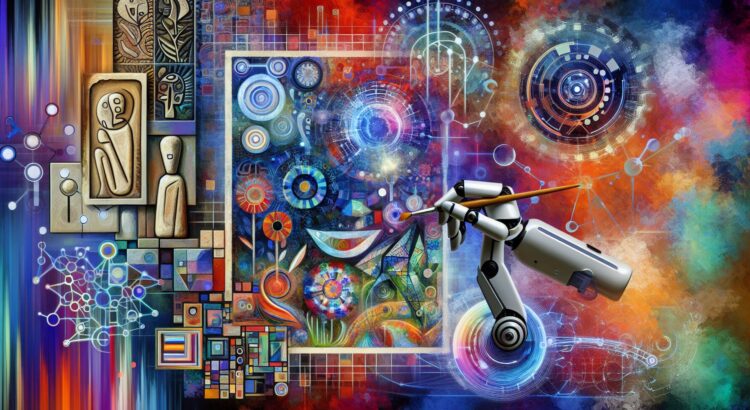
Hey, fellow tech enthusiasts! Today, I want to talk about something that’s been bouncing around in my head like a Van Gogh painting come to life. We’re talking about how Artificial Intelligence is changing creative arts. I know what you’re thinking—AI and creativity? Aren’t they like oil and water? But let me tell you, the way AI is shaking up the arts scene is creating a whole new Renaissance, and I for one am all in. So grab your digital brush, and let’s wade into this colorful conversation.
The Muse in the Machine
Let me start with a bit of a story. A few months back, I stumbled across an AI-generated art exhibit. At first, I was skeptical. “How can a machine understand the subtlety of a Picasso or the emotional punch of a Frida Kahlo?” I wondered. Yet, there I was, standing in front of a canvas that was undeniably moving. The textures, the blend of colors, the eerie familiarity—I was captivated!
AI doesn’t just mimic; it learns. Through machine learning algorithms, AI absorbs patterns and style elements that human artists have developed over centuries. Then, like a digital chameleon, it creates something new and surprising. Companies like OpenAI are leading this space with algorithms that can generate art that challenges traditional norms and perspectives, and the results are, quite frankly, mind-blowing.
The Rapid Rise of AI Composers
Music is another area where AI is breaking barriers and dropping beats—literally. AI-powered platforms can now compose original music, and it’s not just your run-of-the-mill elevator tunes. Think film scores or experimental music compositions that are as complex as anything a human could dream up.
One of the most buzzworthy examples is AIVA (Artificial Intelligence Virtual Artist). This algorithmic music maestro has been scoring music for films, video games, and even advertisements. AIVA even became a registered composer in its own right, which sounds like a sci-fi plot twist but is very much reality.
But here’s where it gets even cooler. Imagine you’re a budding musician, but theory isn’t really your strong suit (I hear you—music theory was my academic Everest). You could collaborate with AI to flesh out compositions, make them more complex, or even explore sounds and genres you’ve never ventured into before. Like having Mozart as your backup band!
Challenges on the Canvas
Not all is rosy in this digital paradise. Let’s face it—tech comes with its own set of problems, and AI in the arts is no exception. One big issue is the ethical and copyright mess that gets tangled up in this new frontier. When an AI creates something, who owns it? The coder? The program? The company?
This lack of clarity is sparking debates that could go down in history next to “Is Pluto a planet?” People like Elon Musk and organizations such as the Creative Commons are pushing discussions forward, but we’re still in the early chapters of this saga.
Then there’s the question of quality. With AI able to generate artworks and music almost instantly, could we see a flood of mediocre content? The market could become oversaturated, causing truly exceptional pieces to get buried under digital noise. I think of it as a double-edged sword; more content could also mean more diverse expressions and innovation.
A Big Shift in Creativity
Let me speculate a bit here. Imagine a future where AI and humans create partnerships in the arts. You might wake up one day, ask your AI assistant for a morning tune, and receive a freshly composed symphony tailor-made for you. Artists might use AI to test boundaries they couldn’t have imagined, creating new styles that would become tomorrow’s classics.
Moreover, AI might democratize the art world, making it more inclusive than ever. You don’t need to be a virtuoso to create evocative pieces; armed with an idea and a few digital tools, anyone can become the next David Bowie or Banksy (minus the anonymity, perhaps).
Wrapping It Up
As we stand at the edge of this new Renaissance driven by AI, we need to engage with it responsibly and creatively. This isn’t just a fad or a tech trend that’ll be buried in the pile of forgotten ideas. It’s a fundamental shift in the way we create and consume art.
So the next time you swipe through your AI-generated playlist or gaze at an autonomously crafted piece of art, remember—you’re witnessing the dawn of a creative revolution. And who knows? Maybe your next collaborative partner in art won’t have a beating heart, but it might just have an algorithmic soul!
So there it is, my fellow tech aficionados. The world of AI and creativity is rich, messy, and full of potential. Here’s to being a part of this wild ride! Cheers! 🍻
Remember when art belonged only to humans? That world is changing fast. AI and creativity are colliding in ways that would have seemed impossible just a few years ago. It’s like watching someone discover a new color that shouldn’t exist but somehow does. AI isn’t just another tool anymore. It’s becoming a creative partner, opening doors we didn’t even know were there.
This isn’t really about algorithms and code. It’s about questioning what creativity means. What makes something art? Can a machine be an artist? These aren’t just philosophical puzzles anymore. They’re real questions with real implications.
The Evolution of Machine-Generated Art
Let’s be honest. Early machine-generated art was terrible. We’re talking basic shapes and color combinations that looked like a computer having a stroke. The technology just wasn’t there yet.
Everything changed with deep learning and neural networks. Machines could suddenly “learn” from existing artworks, copy styles, and create original pieces. But the real game-changer was Generative Adversarial Networks (GANs). These allowed AI to create art that didn’t just copy human creativity but sometimes surpassed it.
The Role of Generative Adversarial Networks
Ian Goodfellow created GANs in 2014. Think of them as two AI networks locked in creative combat. One generates images while the other judges them. This constant competition forces the generator to get better and better, reaching levels of creativity we thought were impossible for machines.
GANs learn from massive collections of human-created art. Now they can invent new artistic styles, work within established ones, and experiment with forms and textures in ways that surprise even their creators. We’ve seen AI-generated paintings sell for millions and music compositions that challenge everything we thought we knew about harmony and melody.
Bridging the Gap Between Human and Machine Creativity
So what does this mean for human artists? At first, many saw AI as a threat. Now? It’s increasingly viewed as a powerful creative amplifier.
Collaborations and Co-Creations
Human-AI collaborations are happening everywhere. Artists around the world are finding creative ways to work with AI. Some use it to generate rough sketches, then refine them into finished pieces. Others tap into AI for conceptual inspiration, using its pattern-recognition abilities to spot connections the human mind might miss.
The results can be stunning. Mario Klingemann creates AI-generated artworks that blend historical and modern elements. Refik Anadol builds data-driven installations that transform spaces through algorithmic precision. These aren’t novelties anymore. They’re legitimate art forms.
Empowering New Artists
AI is also democratizing art creation. Don’t have formal training? No problem. Platforms like DeepArt.io or RunwayML let aspiring artists jump into creative expression without mastering traditional techniques first. The barriers to entry are crumbling.
Embracing Techno-Utopianism
This AI-driven artistic explosion forces us to reconsider creativity itself. Are we heading toward a world where AI is an equal creative partner? Maybe even a pioneer leading us into uncharted territory? Art purists might resist the idea of machines as “artists,” but optimists see unlimited possibilities.
Breaking Down Borders
AI doesn’t have preconceptions. It can merge styles, cultures, and time periods without hesitation, creating fusions that human artists might never consider. Want Renaissance techniques mixed with Dadaist impulses? AI can do that. And it’s not science fiction. These works exist right now.
Ethical and Philosophical Musings
But this new world raises tough questions. Who owns an AI-generated artwork? The algorithm’s creator? The data source? The AI itself? And what happens when machine creativity becomes so advanced that humans are no longer needed in the process?
Conclusion
The meeting of AI and art isn’t just technological progress. It’s an ongoing conversation between human intuition and machine precision. We’re living through a creatively charged period where urgent discussions about art’s role in society can’t be delayed.
AI has opened new doors for artistic creation and redefined existing ones. Neural networks whisper digital inspirations while GANs paint visions of tomorrow. The future promises amazing things for those willing to embrace the unknown.
Artists, technologists, and critics need to work together, creating an environment of curiosity and open-mindedness. As we explore this new artistic frontier, we must stay as adaptive and innovative as the technologies we’re working with. Whether you’re an artist, a technologist, or just someone fascinated by this intersection, there’s plenty to explore and participate in as creativity evolves. Welcome to the age of AI-powered art.
As we start another decade, the quest for longevity remains one of humanity’s oldest dreams and one of today’s most fascinating tech stories. With what feels like constant breakthroughs in biotechnology, artificial intelligence, and genomics, we’re on the edge of a revolution that could extend human life like never before. Let’s explore how these advances are pushing boundaries and potentially redefining what it means to be human!
The Longevity Tech Boom: What’s Cooking?
Let’s face it: the idea of living longer, healthier lives isn’t just a daydream anymore; it’s a tech startup’s wet dream! Venture capitalists are pouring money into longevity research as if it were the new goldmine. In the past few years, we’ve seen funding for life-extension startups explode. From gene editing to cellular reprogramming, the options are exciting and downright mind-boggling.
Take Calico, for instance, a company that Google launched to extend human lifespan. They’re investing heavily in understanding the biology of aging by using cutting-edge AI research to decode age-related diseases. Their goal? Find the holy grail of not just living longer but also living better. And they aren’t alone. With a growing number of longevity-focused ventures, it’s clear we’re entering an age where our potential lifespan could double or even triple.
AI Meets Longevity: The Perfect Pairing
Artificial Intelligence is proving to be a game changer in the longevity sector. By working with massive datasets, AI algorithms can sift through billions of data points, helping researchers identify patterns and targets for interventions that could slow down aging.
The partnership between AI and biotechnology is already producing impressive results. For instance, researchers are using machine learning to analyze gene sequences and discover genetic factors tied to longevity. This could lead to actionable insights that could be applied to gene therapy, targeting the very mechanisms of aging.
Consider companies like Unity Biotechnology, which focuses on creating therapies that clear out senescent cells—those rogue cells that accumulate as we age and contribute to age-related diseases. By applying AI to analyze the effectiveness of their drug candidates, they’re moving faster than ever. This fusion of longevity research and AI could soon produce treatments that allow us not merely to age gracefully but to halt aging itself.
Genomics: Rewriting the Blueprint of Life
The Human Genome Project opened the door for genomics innovations that have pushed us into a new era of personalized medicine. The ability to read and write DNA—thanks to CRISPR technology—has opened doors once thought to be locked forever.
Imagine a future where we can customize our genetic blueprints to enhance longevity. CRISPR not only allows us to modify genes to eliminate disease but also lets us tweak genes involved in aging. With advances in synthetic biology, the potential to change our biological makeup becomes less science fiction and more reality.
It’s no longer speculation. Companies like Editas Medicine are stepping onto the stage of gene editing with their therapies that target genetic forms of blindness and blood disorders, all while getting one step closer to developing potential solutions for age-related conditions.
Big Pharma vs. Bayesian Models
In the race toward longevity treatments, the competition is fierce, and innovation is everything. Traditional big pharma companies are realizing that they need to adapt or risk becoming obsolete. The old approach of one-size-fits-all medications is becoming less effective, and as we lean into personalized medicine, companies are starting to embrace Bayesian models to make data-driven decisions about treatment effectiveness in real-time.
These models allow researchers to integrate new data as it comes in, refining their understanding of which treatments work particularly well based on individual patient profiles. The end goal? No more trial-and-error drug prescriptions! This tailored approach not only has the potential to advance longevity treatments faster but also enhances patient safety and improves outcomes.
Wearable Tech: Tracking the Path to Longevity
If you think wearables are just for fitness enthusiasts, think again. Devices like the Apple Watch or Fitbit are evolving from simple step counters to advanced health monitoring systems that can provide invaluable data regarding our health and longevity prospects.
Currently, wearables can track heart rate, blood oxygen levels, and even stress levels, but the next generation is set to revolutionize everything. Imagine wearables that integrate AI algorithms to give you tailored advice based on your unique biological markers—everything from suggesting specific foods for longevity to alerting you when you’re at risk of a potential health crisis.
Strava, a popular social network for athletes, has introduced features that analyze athletic performance data and offer personalized recommendations for improving longevity-related health metrics. This very data could be crucial for ongoing research into how our lifestyle choices impact our lifespan.
Ethical Dilemmas and Societal Implications
While it’s easy to get excited about these advances, we must pause to consider the ethical implications and societal ramifications. If technology enables us to live significantly longer lives, what does that mean for resource allocation, overpopulation, or quality of life? How do we balance access to these technologies so that they don’t just become a privilege of the wealthy elite?
As we advance, conversations must happen regarding ageism and the societal frameworks that govern how we view aging. Longevity technology shouldn’t just aim to extend lifespan but also enrich our quality of life in those added years. We must strive for a society that values the experience and wisdom of older generations while ensuring that we encourage inclusivity and accessibility.
Conclusion: The Road Ahead
We’re standing at a promising intersection where technology and biology work together toward a common goal: an enhanced human lifespan. Our understanding of aging is improving at a dizzying pace, thanks to breakthroughs in AI, genomics, and personalized medicine. Emerging technologies in the longevity sector present unprecedented opportunities to redefine our relationship with aging and longevity itself. As we navigate the complexities of this brave new world, balancing innovation and ethics will be crucial.
So here’s the burning question: What kind of future do we want to build? One where a longer life is accompanied by richness in experience, wisdom, and health? Or one where additional years exist only for the privileged few? As we sail toward this new horizon, let’s ensure that the quest for longevity leads to true enrichment of life for everyone.
Pack your bags—this journey into the future of longevity has only just begun. Stay tuned for more updates on what’s shaking in the tech world!
Geico keeps working on better customer service, and they’ve built some useful tools over the years. You can post comments or complaints that help other drivers figure out what they might be missing. If something about their service bugs you and you want to speak up, here’s how to make the most of their feedback system.
Getting started with Geico’s review tool is pretty straightforward. Just fill out the quote form with your information. They’ll ask if you want to write an original review or give feedback about a potential replacement car. For original reviews, you’ll describe how you found the vehicle, what you paid, and any issues you ran into. If you’re reviewing a replacement car option, they want to know if your feedback comes from actually seeing the vehicle or just going through some automated checklist.
Once you’ve entered everything, the system analyzes your comments from different angles. It only takes a few minutes of reading before Geico figures out which parts of your feedback work for or against them. Don’t like how your original review turned out? No problem. Just plug in new details. Say you want a total loss estimate that’s $50 lower than what you originally paid for that rental car. Enter the new number and they’ll pull the old one.
Here’s something cool about Geico’s review tool: it ranks every piece of information you provide. This comes in handy when you want to see how you stack up against other customers. If you’re part of a group with wildly different driving records, everyone needs to hit a certain professionalism standard to get the discount. Most of the time, this discount kicks in automatically for people who follow the rules.
Want to track all those different discounts? Head to Geico’s official website. You’ll find a complete list of what you qualify for, plus detailed explanations of each discount. This makes shopping for commercial auto insurance much easier. You’ll also pick up useful tips for maximizing your policy benefits. They suggest things like picking a company that covers both collision and comprehensive, going with umbrella insurance when it makes sense, and jumping on multiple driver discounts.
When you’re checking out GEICO reviews for their other insurance products, you’ll notice they have several rental car options. Since rental car services can get pricey fast, consider adding this coverage on top of your collision and comprehensive protection from Geico. This combo helps protect both your assets and vehicles when you’re driving around. Plus, if your rental breaks down or gets damaged while you’re on the road, just call Geico and they’ll get you a replacement to get you home quickly.
A couple of things to remember when getting Geico quotes online. First, go straight to local agents who work with Geico instead of using some third-party site. Second, avoid websites that promise unlimited discounts. Work with trusted local Geico agents and you’ll find all the real discounts available to you. Then you can actually use those discounts to bring down your insurance costs.
Geico offers quite a few discount options worth exploring. You can call local agents to get their take on Geico and learn about the various insurance policies they sell. This helps you figure out which policy fits your specific situation and which ones you might want to skip. That’s the real value of reviews. You get honest feedback from people who actually did their homework and learned about Geico, instead of just skimming through a bunch of generic review articles.