Introduction
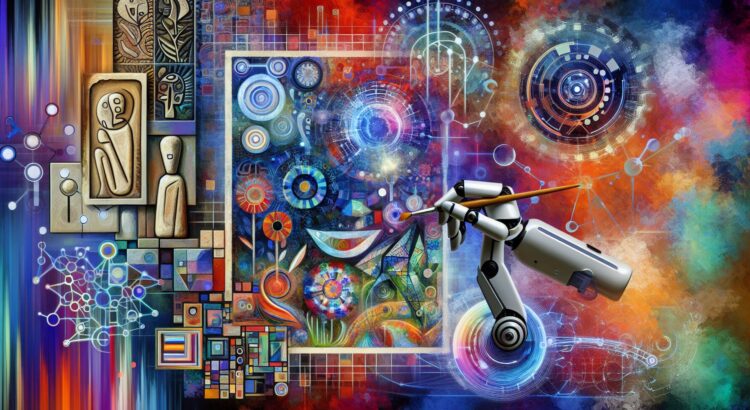
Remember when art belonged only to humans? That world is changing fast. AI and creativity are colliding in ways that would have seemed impossible just a few years ago. It’s like watching someone discover a new color that shouldn’t exist but somehow does. AI isn’t just another tool anymore. It’s becoming a creative partner, opening doors we didn’t even know were there.
This isn’t really about algorithms and code. It’s about questioning what creativity means. What makes something art? Can a machine be an artist? These aren’t just philosophical puzzles anymore. They’re real questions with real implications.
The Evolution of Machine-Generated Art
Let’s be honest. Early machine-generated art was terrible. We’re talking basic shapes and color combinations that looked like a computer having a stroke. The technology just wasn’t there yet.
Everything changed with deep learning and neural networks. Machines could suddenly “learn” from existing artworks, copy styles, and create original pieces. But the real game-changer was Generative Adversarial Networks (GANs). These allowed AI to create art that didn’t just copy human creativity but sometimes surpassed it.
The Role of Generative Adversarial Networks
Ian Goodfellow created GANs in 2014. Think of them as two AI networks locked in creative combat. One generates images while the other judges them. This constant competition forces the generator to get better and better, reaching levels of creativity we thought were impossible for machines.
GANs learn from massive collections of human-created art. Now they can invent new artistic styles, work within established ones, and experiment with forms and textures in ways that surprise even their creators. We’ve seen AI-generated paintings sell for millions and music compositions that challenge everything we thought we knew about harmony and melody.
Bridging the Gap Between Human and Machine Creativity
So what does this mean for human artists? At first, many saw AI as a threat. Now? It’s increasingly viewed as a powerful creative amplifier.
Collaborations and Co-Creations
Human-AI collaborations are happening everywhere. Artists around the world are finding creative ways to work with AI. Some use it to generate rough sketches, then refine them into finished pieces. Others tap into AI for conceptual inspiration, using its pattern-recognition abilities to spot connections the human mind might miss.
The results can be stunning. Mario Klingemann creates AI-generated artworks that blend historical and modern elements. Refik Anadol builds data-driven installations that transform spaces through algorithmic precision. These aren’t novelties anymore. They’re legitimate art forms.
Empowering New Artists
AI is also democratizing art creation. Don’t have formal training? No problem. Platforms like DeepArt.io or RunwayML let aspiring artists jump into creative expression without mastering traditional techniques first. The barriers to entry are crumbling.
Embracing Techno-Utopianism
This AI-driven artistic explosion forces us to reconsider creativity itself. Are we heading toward a world where AI is an equal creative partner? Maybe even a pioneer leading us into uncharted territory? Art purists might resist the idea of machines as “artists,” but optimists see unlimited possibilities.
Breaking Down Borders
AI doesn’t have preconceptions. It can merge styles, cultures, and time periods without hesitation, creating fusions that human artists might never consider. Want Renaissance techniques mixed with Dadaist impulses? AI can do that. And it’s not science fiction. These works exist right now.
Ethical and Philosophical Musings
But this new world raises tough questions. Who owns an AI-generated artwork? The algorithm’s creator? The data source? The AI itself? And what happens when machine creativity becomes so advanced that humans are no longer needed in the process?
Conclusion
The meeting of AI and art isn’t just technological progress. It’s an ongoing conversation between human intuition and machine precision. We’re living through a creatively charged period where urgent discussions about art’s role in society can’t be delayed.
AI has opened new doors for artistic creation and redefined existing ones. Neural networks whisper digital inspirations while GANs paint visions of tomorrow. The future promises amazing things for those willing to embrace the unknown.
Artists, technologists, and critics need to work together, creating an environment of curiosity and open-mindedness. As we explore this new artistic frontier, we must stay as adaptive and innovative as the technologies we’re working with. Whether you’re an artist, a technologist, or just someone fascinated by this intersection, there’s plenty to explore and participate in as creativity evolves. Welcome to the age of AI-powered art.